
The Food Safety and Standards Authority of India (FSSAI) has commissioned a quality check on MDH and Everest products. This follows complaints that several popular spice mixes of the two leading brands contained traces of ethylene oxide more than the permissible levels, official sources said. This move by FSSAI comes after Hong Kong and Singapore recalled variants of the two masala majors' products in their countries.
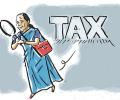
Direct tax collection, net of refunds, moderately exceeded the revised estimates (RE) for the financial year 2023-24 (FY24) on the back of personal income tax revenues, but corporation tax receipts fell short of the RE. Net direct tax collection stood at Rs 19.58 trillion in FY24, surpassing the RE of Rs 19.45 trillion by Rs 13,000 crore, or 0.7 per cent. The government had revised up FY24 projections for personal income tax by 13.5 per cent over the Budget estimates (BE) of Rs 9 trillion, at Rs 10.22 trillion.
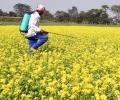
With farm Acts out of the picture, the government may look at reforming the input side of the agriculture sector - regulations and rules that govern seeds, fertilisers and plant chemicals. Sources said such a blueprint, which is aimed at making the life of farmers easier, with quicker approvals but not compromising on quality, is in the works as part of the 100-day agenda of Modi 3.0. Also, ways to administer fertiliser subsidy more effectively and cutting down on leakages and diversions to build on the success of neem-coated urea are being thought of.

The Bharatiya Janata Party (BJP) on Sunday pledged to make 30 million 'Lakhpati Didis', up from the 10 million rural women who have already achieved the feat. Prime Minister Narendra Modi on Sunday released the BJP's manifesto for the upcoming Lok Sabha elections. The manifesto says the ruling party will continue the quarterly financial disbursements under the Pradhan Mantri Kisan Samman Nidhi (PM KISAN) yojana.

Ahead of the seven-phase Lok Sabha elections, keeping food prices under check has emerged as one of the topmost priorities for the government. Food prices would likely have a bearing on the preferences of voters. In the past, there have been instances when governments have been voted out over rising food inflation.

The new excise policy, introduced in Delhi in November 2021, made sweeping changes to the city's liquor trade.

An income tax tribunal held that the amount received by Google Ireland from Google India towards marketing and distribution rights of the AdWords programme is not royalty, and hence, cannot be taxed at the hands of the assessee (Google Ireland). The ruling by the Bengaluru-based Income Tax Appellate Tribunal (ITAT) may have repercussions on similar transactions by multinationals, feel experts. Explaining the case, Amit Maheshwari, tax expert at AKM Global, said Google Ireland had received Rs 8,662.93 crore under the Google Reseller Agreements.

'Right to apprenticeship means that anyone below the age of 25 years with a diploma or other qualifications can demand an apprenticeship with a private, a public sector company or a government organisation. And when he/she demands this, it is the obligation of the government to provide it.'
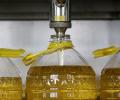
The protesting farmers' main demand to legalise the minimum support price (MSP) regime has divided opinion. One school of thought says it would lead to crop diversification and help India keep under check its burgeoning import bill on edible oils and pulses, while another says it would incentivise farmers to produce low-quality crops. Contrary to popular perception, India has a trade surplus in agriculture and allied activities, which stood at $18.65 billion during 2022-23 (FY23) against $15.92 billion in the previous year. However, the surplus was mainly on account of rice, wheat, sugar, spices, and buffalo meat.

Onion and potato production is expected to be down in the 2023-24 crop year, while the tomato output could be marginally higher, the Department of Agriculture's first advance estimates of horticultural output released on Thursday showed. "Production of onion in 2023-24 is expected to be around 25.47 million tonnes compared to around 30.20 million tonnes last year due to a decrease of 3.43 million tonnes in Maharashtra, 0.99 million tonnes in Karnataka, 0.35 million tonnes in Andhra Pradesh and 0.31 million tonnes in Rajasthan," the official statement by the department of agriculture said.

Tax devolution shares, which threaten to create a north-south divide among states, may have more to do with per capita income, and not so much with population.

Government unlikely to bring in an ordinance to address the developments arising out of the Supreme Court order.

'Personal income tax is growing by 27 per cent and most refunds have already been issued.'

The central government plans to increase the number of highly beneficial neem trees in the country from the existing one tree for every 50 Indians to one tree for every 10 Indians to meet the rising demand from different sectors for neem oil. Presently, India has 18-20 million neem trees in the country, of which 40-45 per cent are in Uttar Pradesh, followed by Maharashtra, Rajasthan, and Tamil Nadu, among others. To achieve the target, the number of neem trees has to rise to almost 140 million.

The Paytm application (app) could potentially face a permanent loss of its integrated mobile wallet feature, currently owned by Paytm Payments Bank (Paytm PB). With the recent crackdown on Paytm PB, sources say getting a fresh wallet licence may get tough for the group. "The Paytm app (One97 Communications) has to apply afresh to the RBI for a licence to operate a prepaid payment instrument (PPI) like a mobile wallet within the Paytm app, as PPI is a regulated entity.
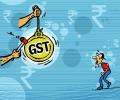
'We crossed Rs 1.7 trillion in three months this financial year.'

'The revenue projection arises out of all sectors doing well and the formalisation of the economy helps in making sure the tax domain gets widened.'
'We now look at divestment as an opportunity for maximising the value of public assets, not necessarily as a short-term resource-raising measure.'

The 1.4% decline projected for 2025 is driven by a 5.6% (72,000) dip in the strength of railway employees to 1.2 million by next year.

Uttarakhand saw the sharpest decline (of 11 per cent) in the "total persons engaged" in manufacturing in the worst-hit pandemic year of 2020-21 as industrial units shut shop, according to the latest Annual Survey of Industries (ASI) data, released by the Ministry of Statistics and Programme Implementation (MoSPI). This was followed by the decline in the workforce in states such as Jharkhand (8.9 per cent), West Bengal (8.3 per cent), Kerala (8 per cent), and Karnataka (7.8 per cent). The "total persons engaged" in an enterprise is defined as the sum of directly employed workers, supervisory or managerial workers, and the unpaid family members who might be engaged in the enterprise.
 © 2026 Rediff.com - Advertise with us - Disclaimer - Privacy Policy - Sitemap - Feedback - About us - Terms of use - Grievances